The Soldier’s Tale
The Soldier’s Tale, by Igor Stravinsky, is a theatrical piece which tells the story of a soldier who makes a deal with the devil. It was written for a small chamber orchestra and narrator, but the musicians are commonly accompanied by actors, dancers, and in this case, puppetry.
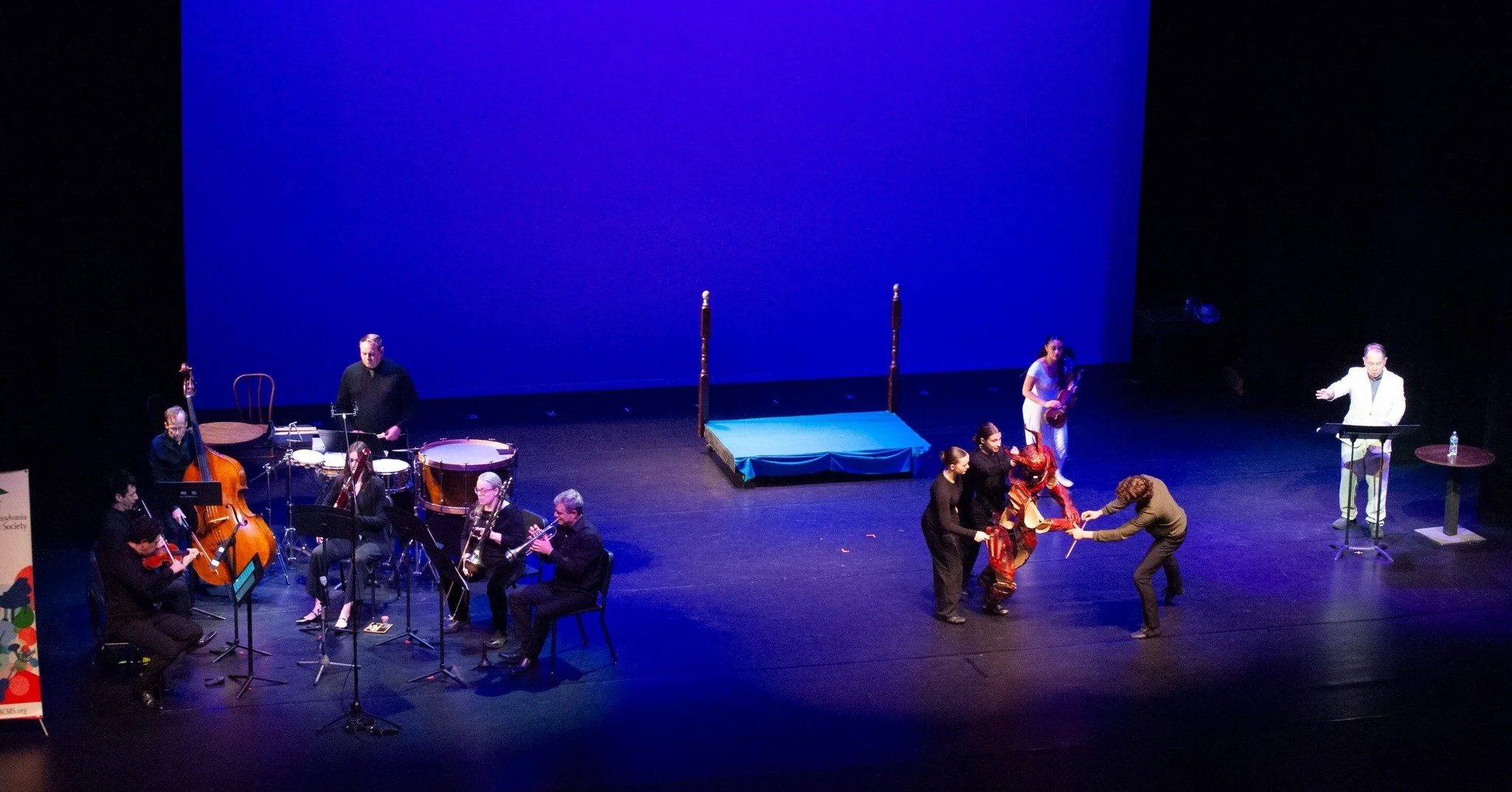
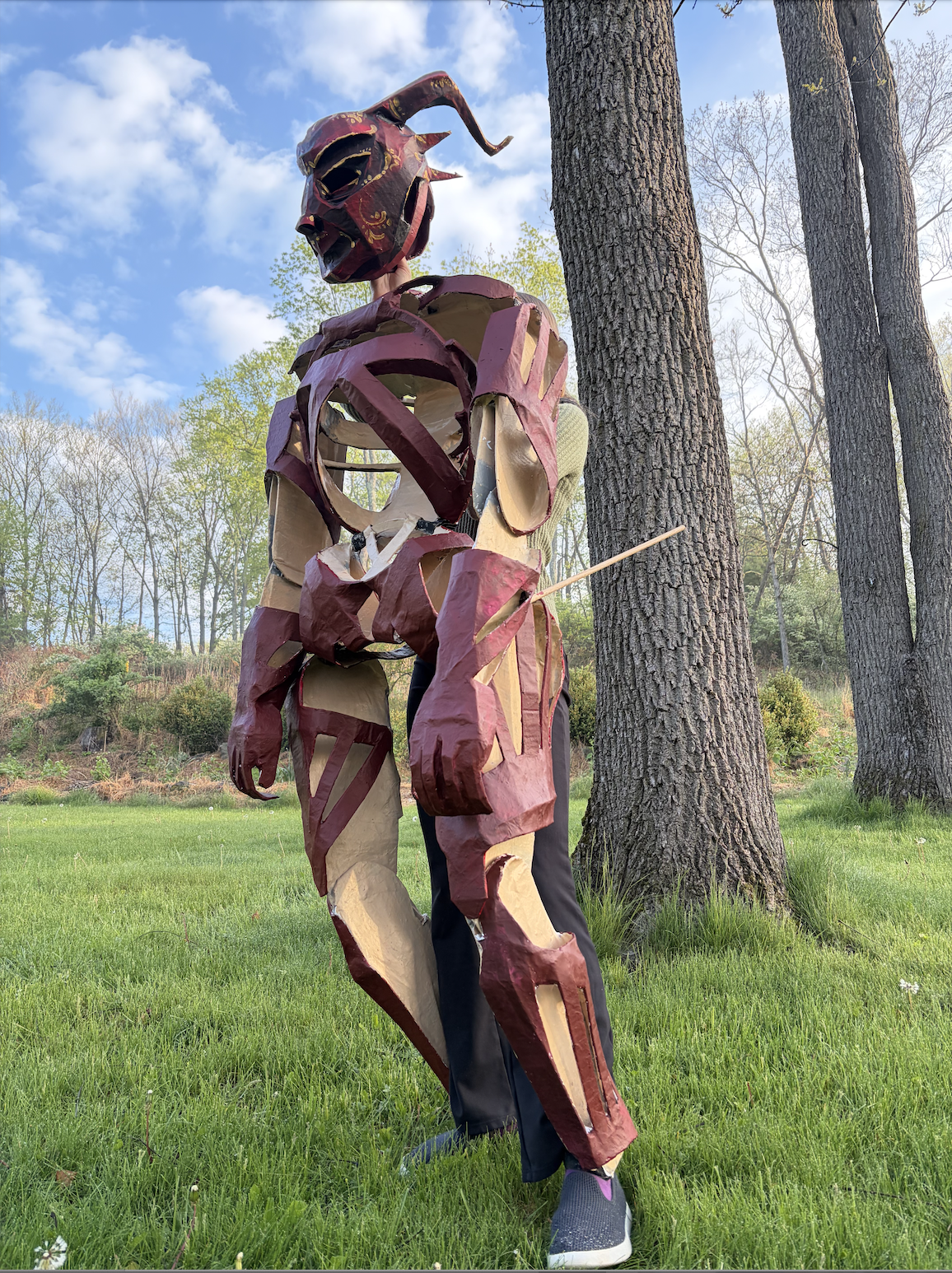
Dancing with the Devil
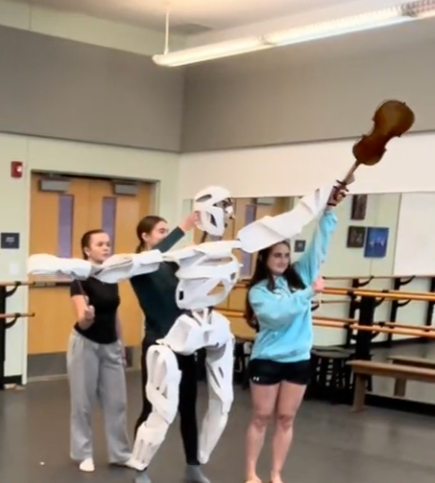
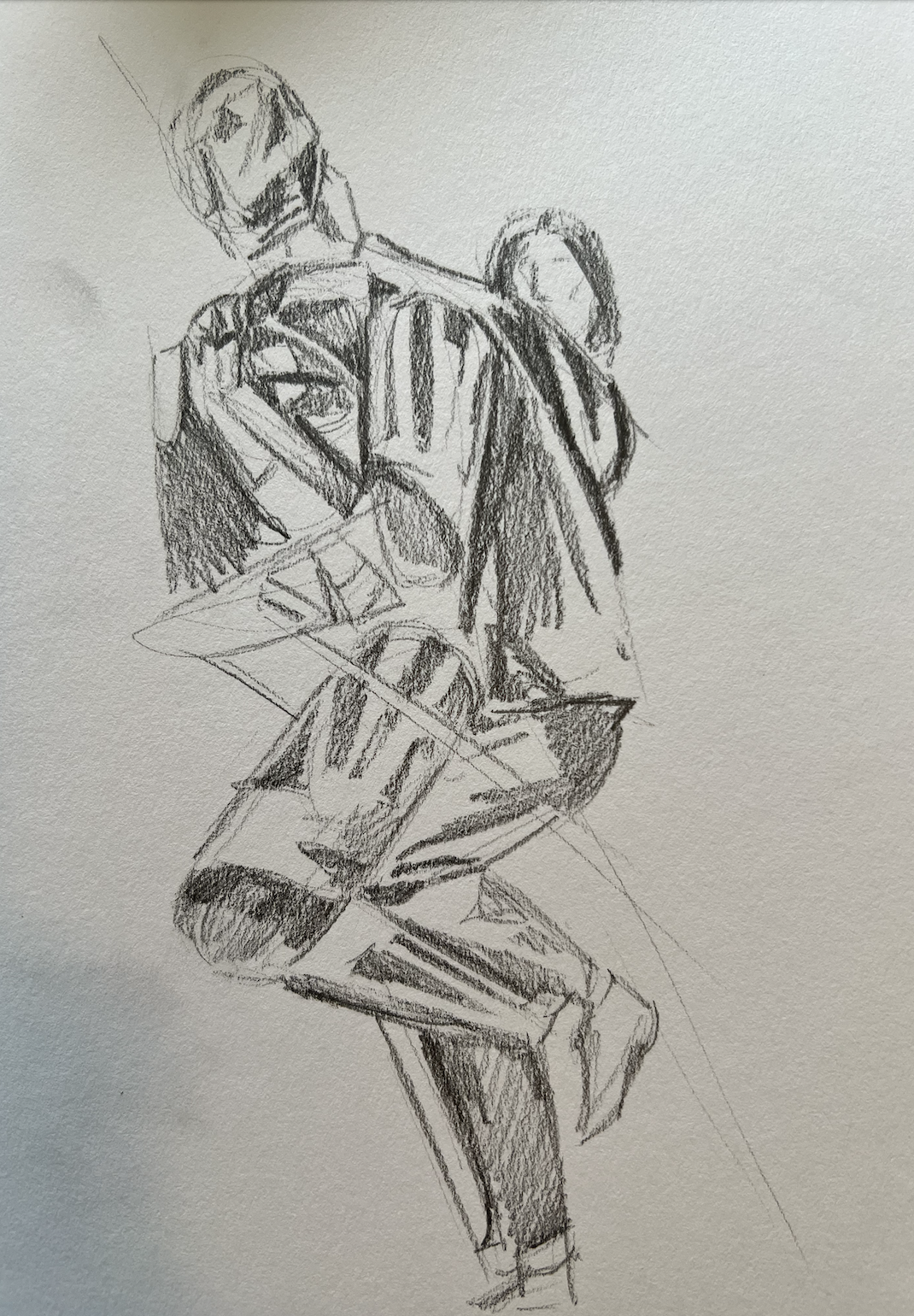
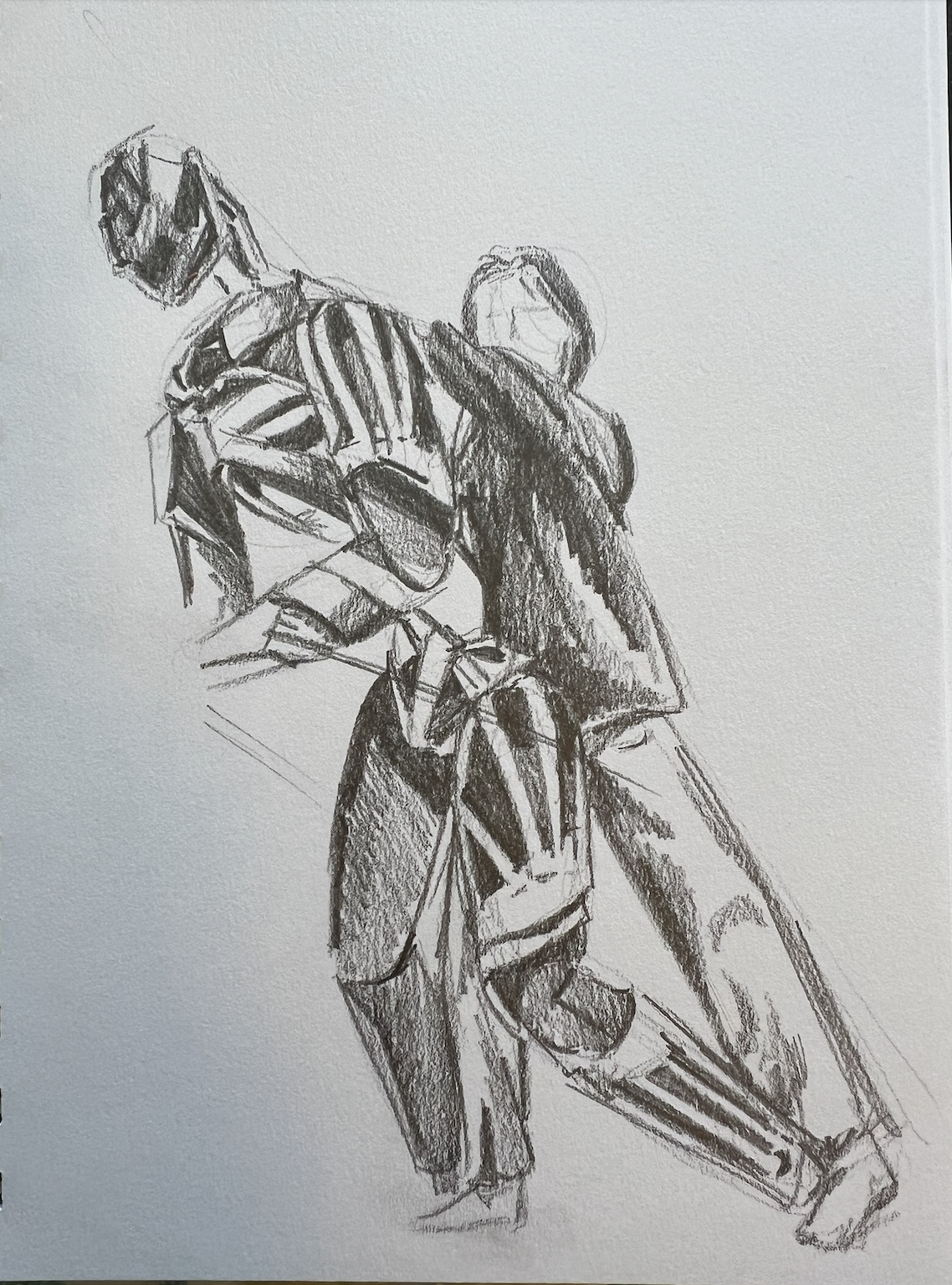
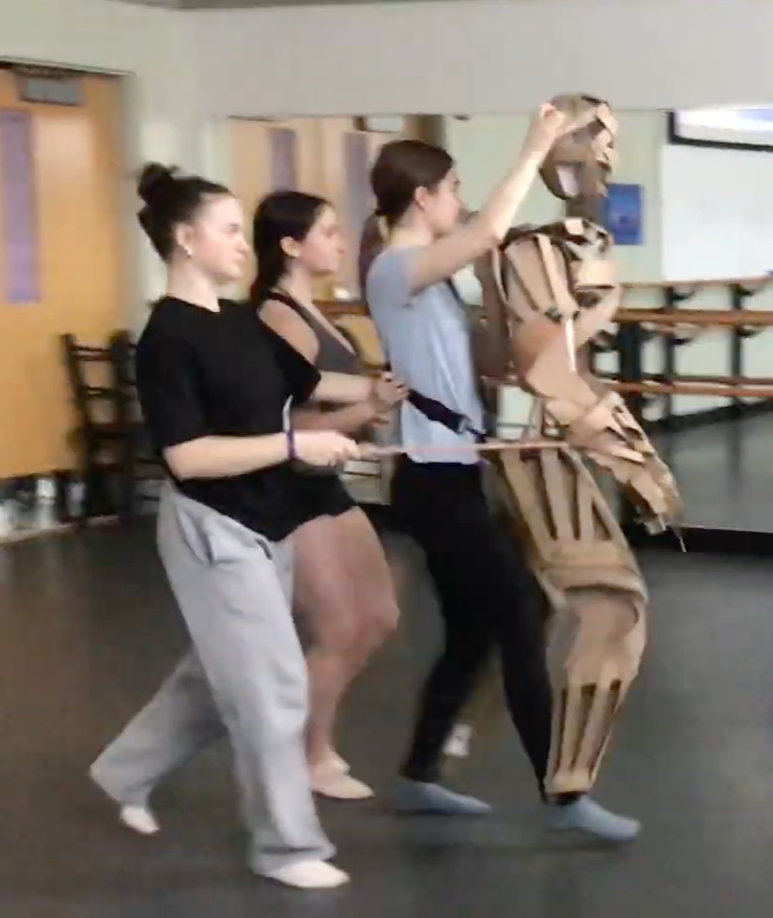
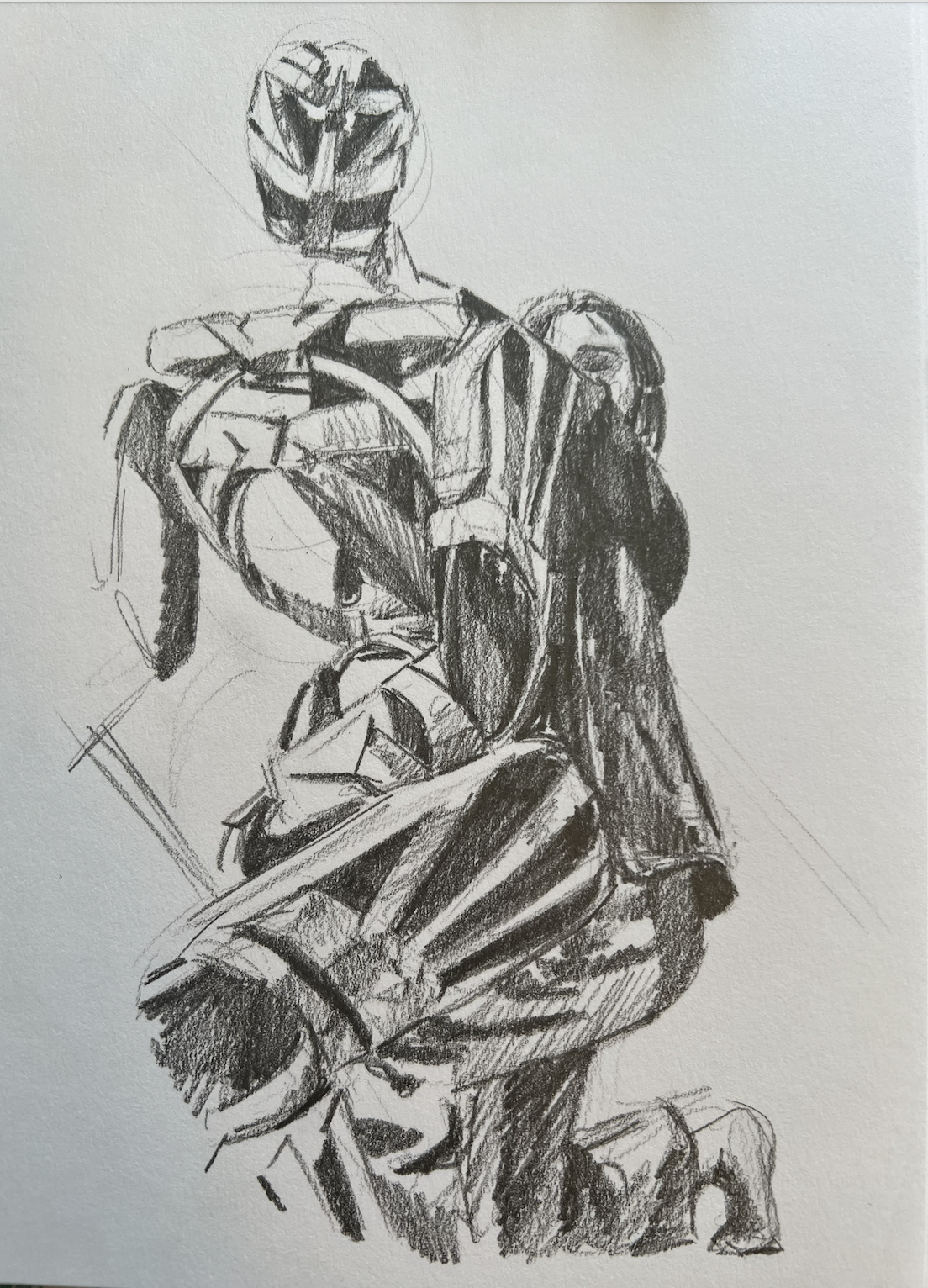
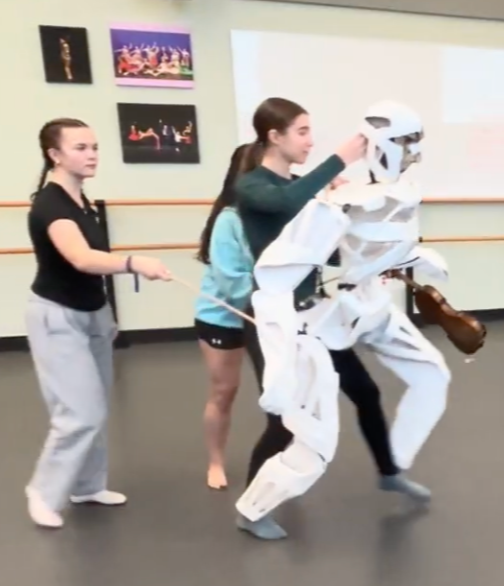
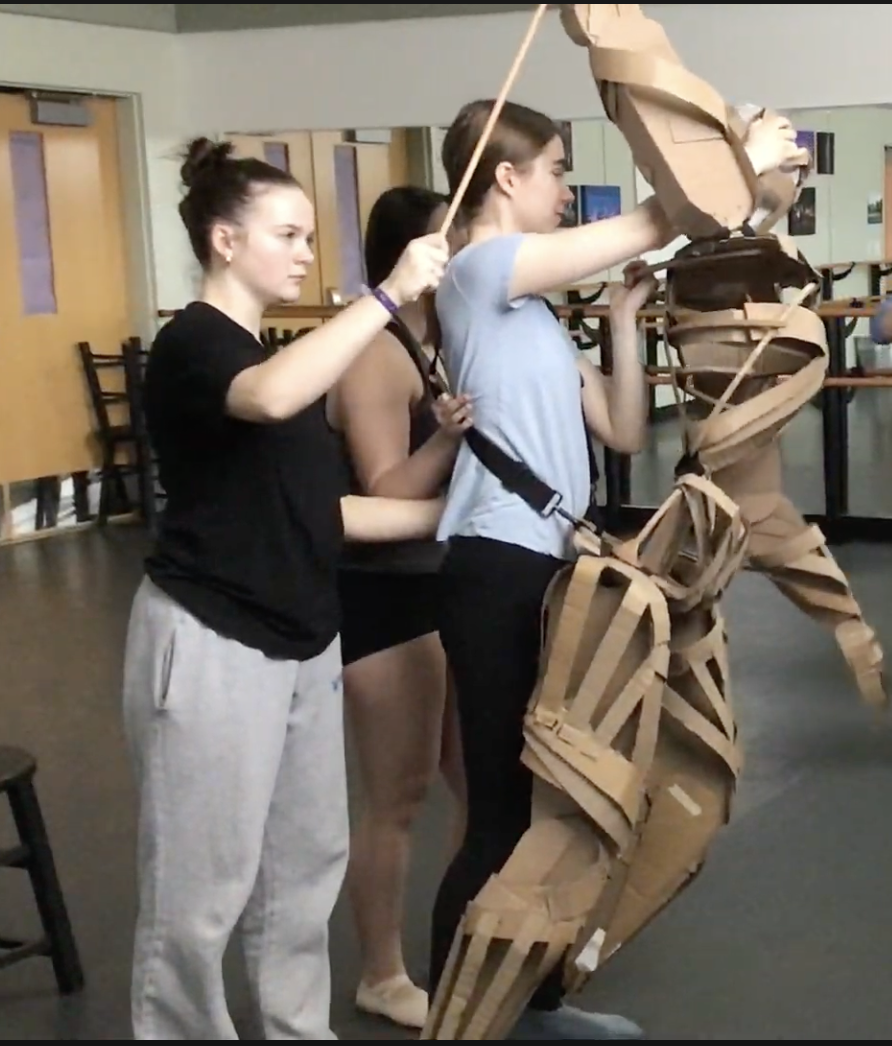
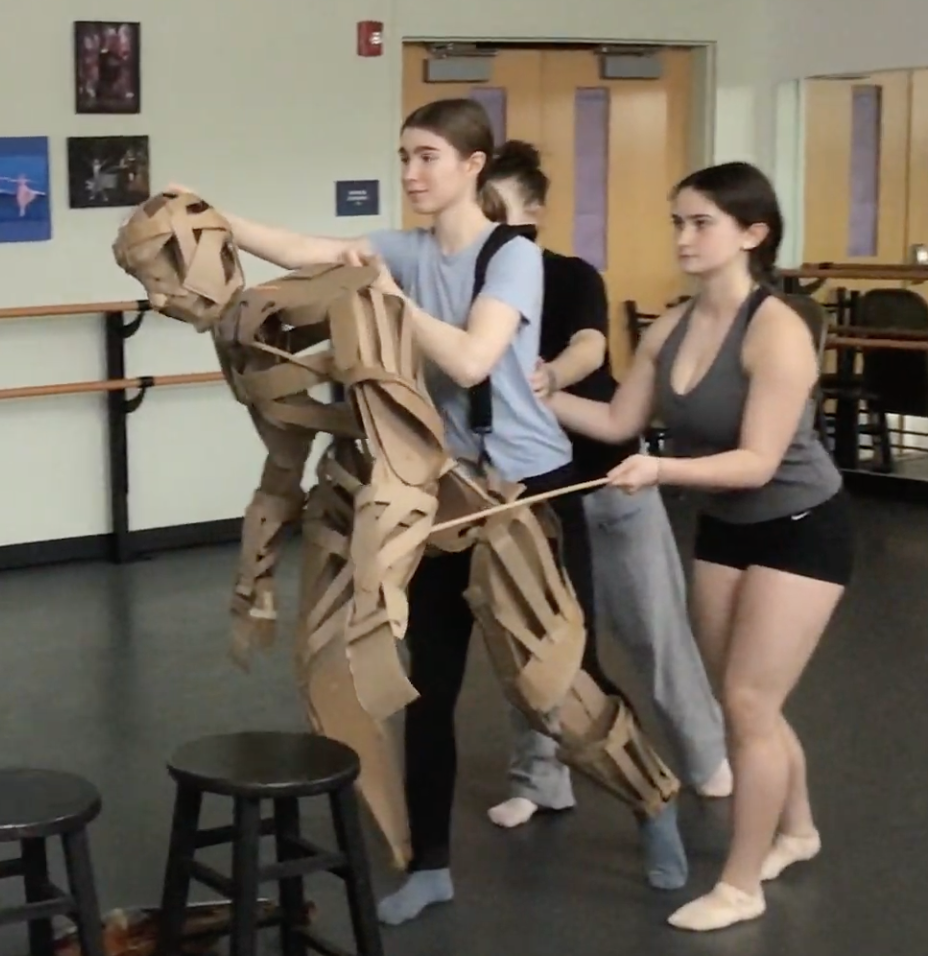
I quickly learned that manipulating a puppet controlled by multiple people is harder than it seems. The three of us spent a lot of time in front of studio mirrors, coordinating our motions so that the puppet moved as one unit. In addition, movement played a big role even at the times when we were not dancing. The devil was always in motion, even if it was just a slight movement of the body to imitate breathing. This way, the puppet seemed far more alive.
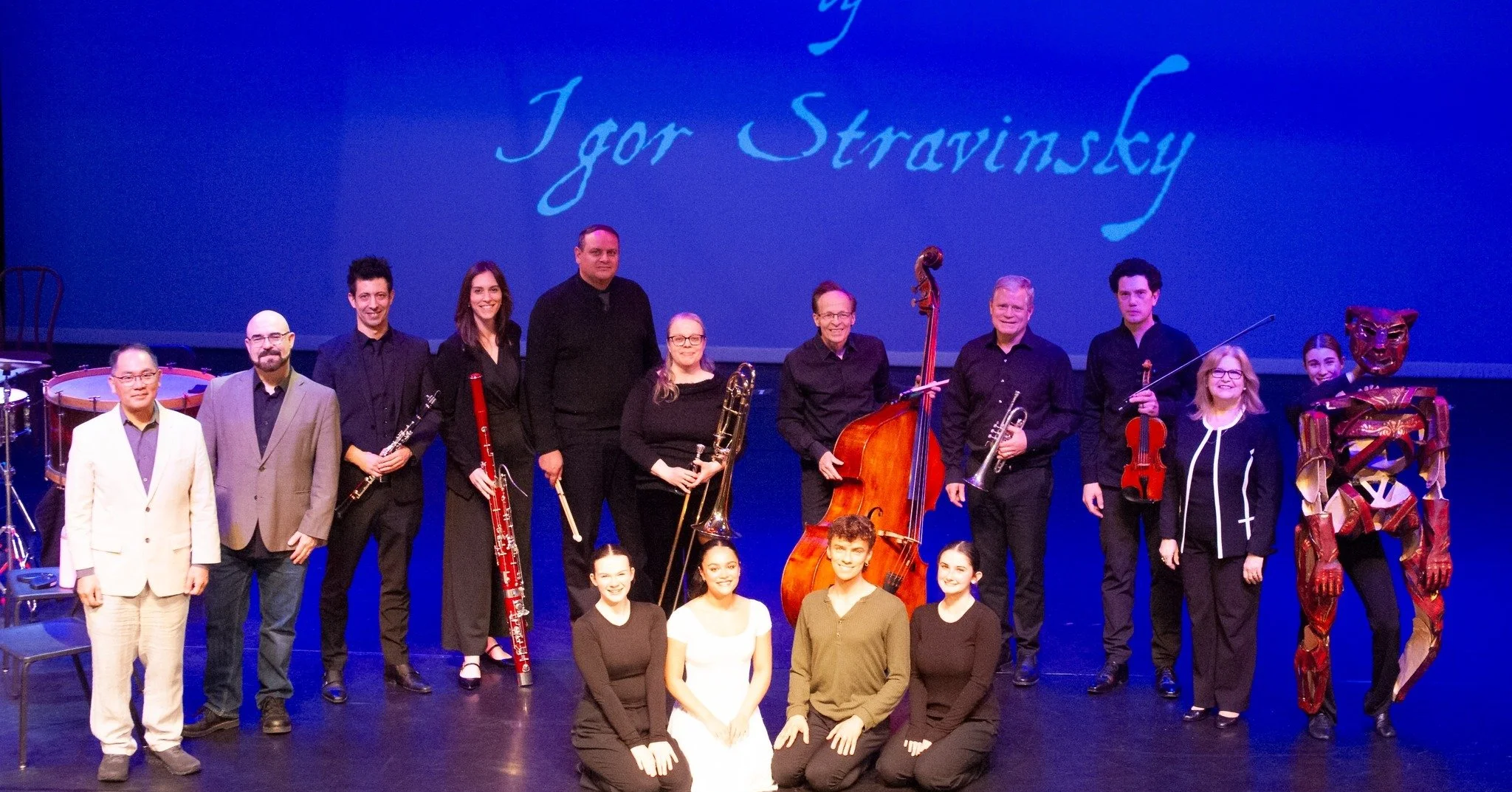
Cast and crew of The Soldier’s Tale, including musicians, narrator, puppeteers, dancers, and directors.
Creation Process
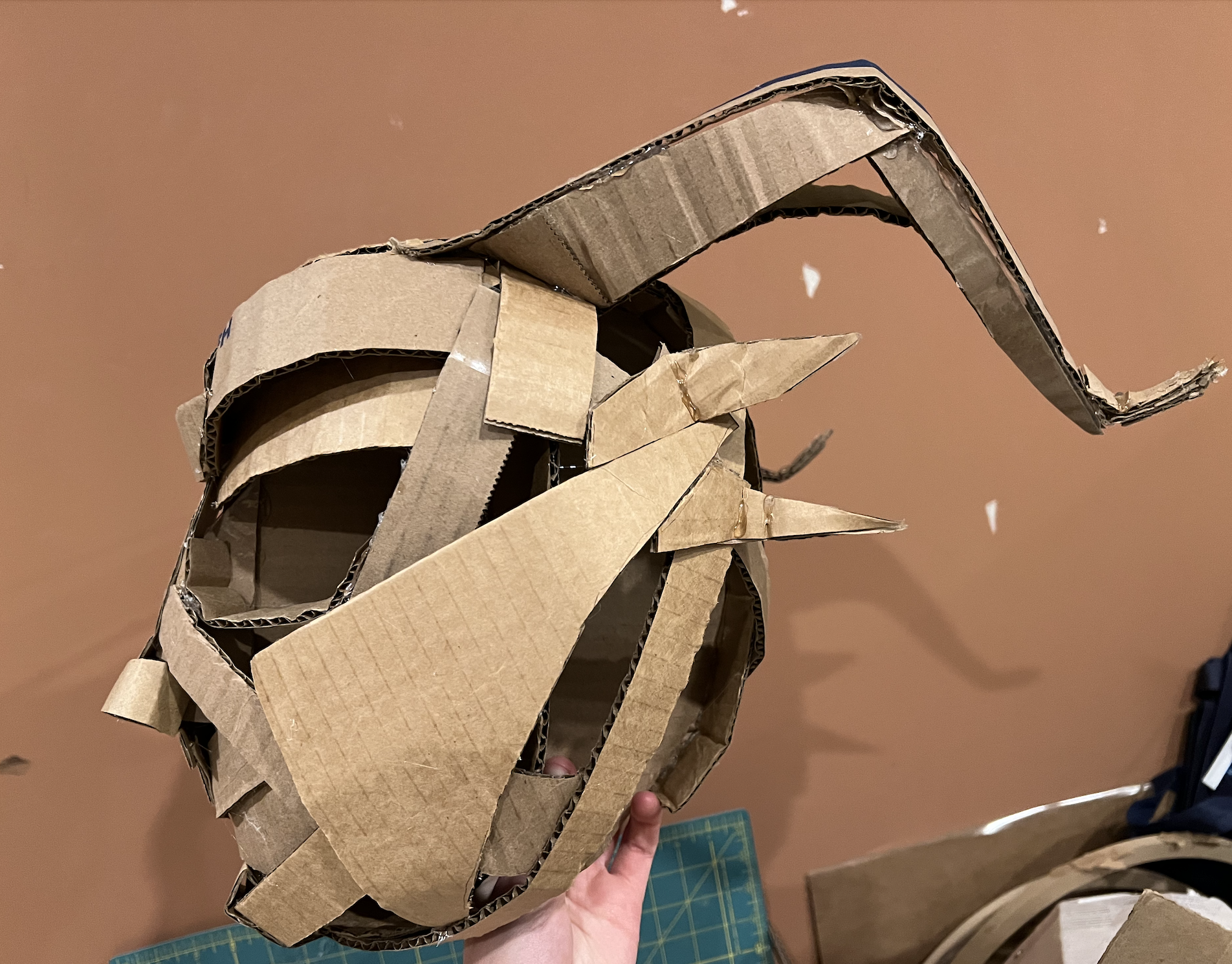
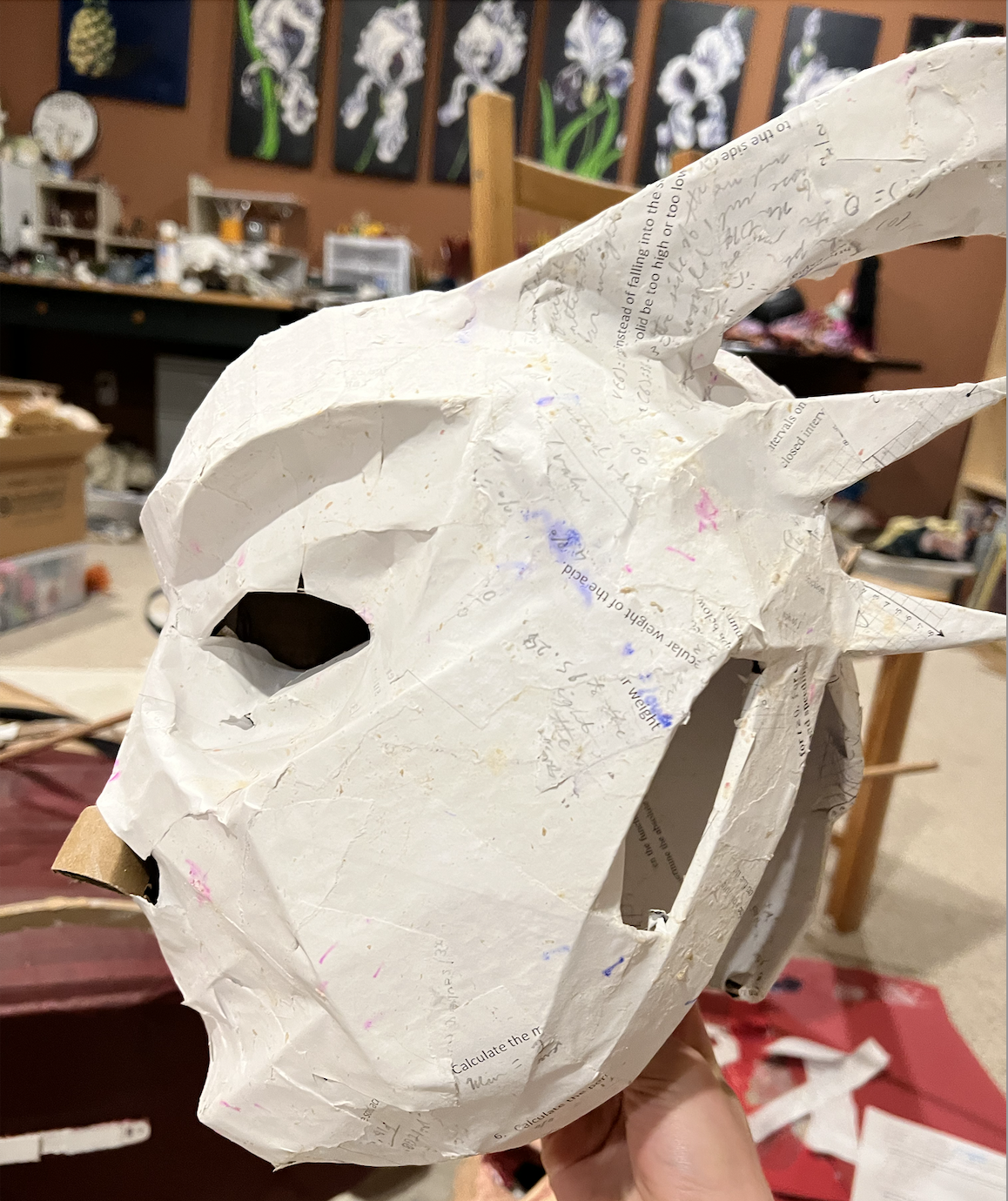
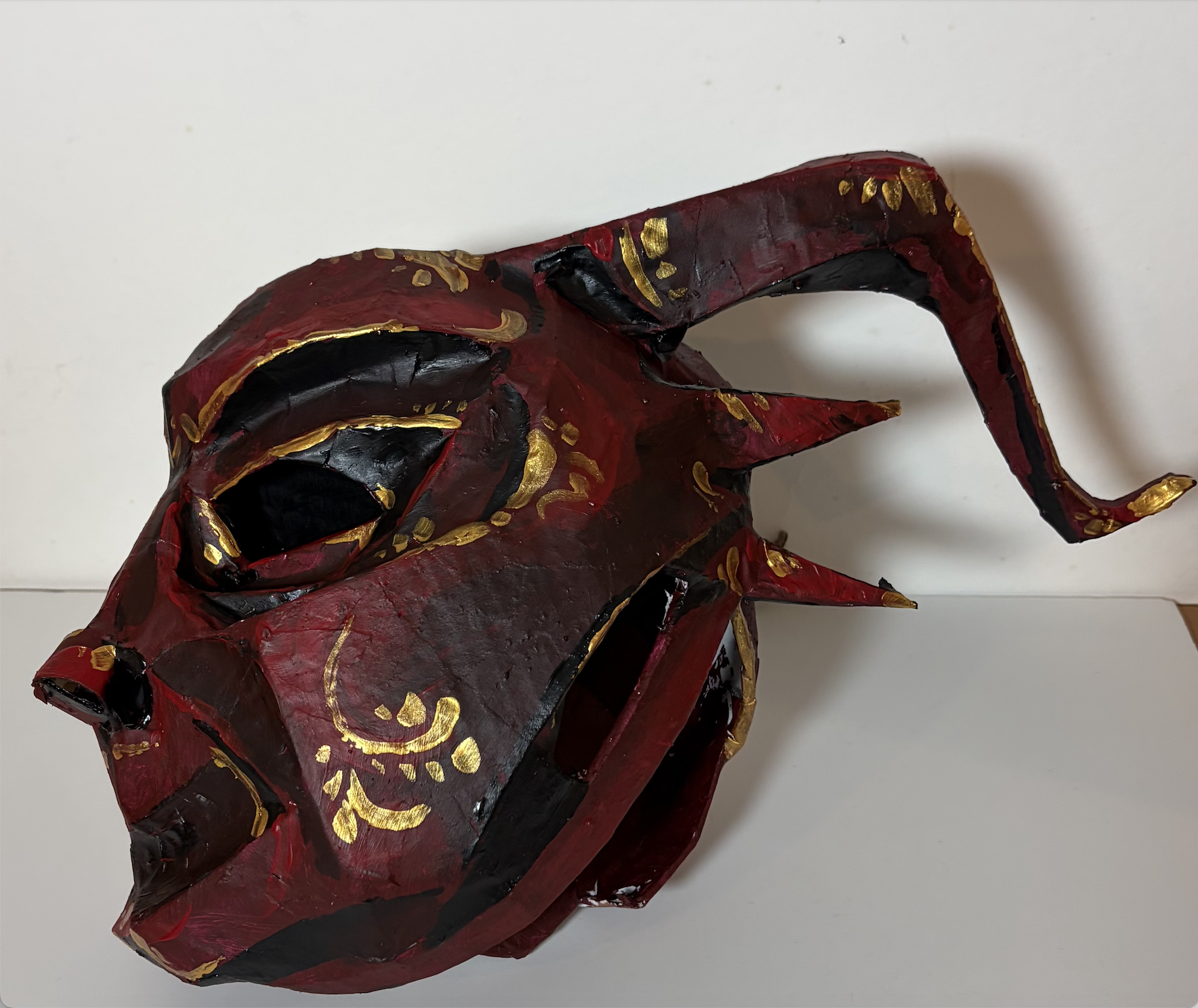
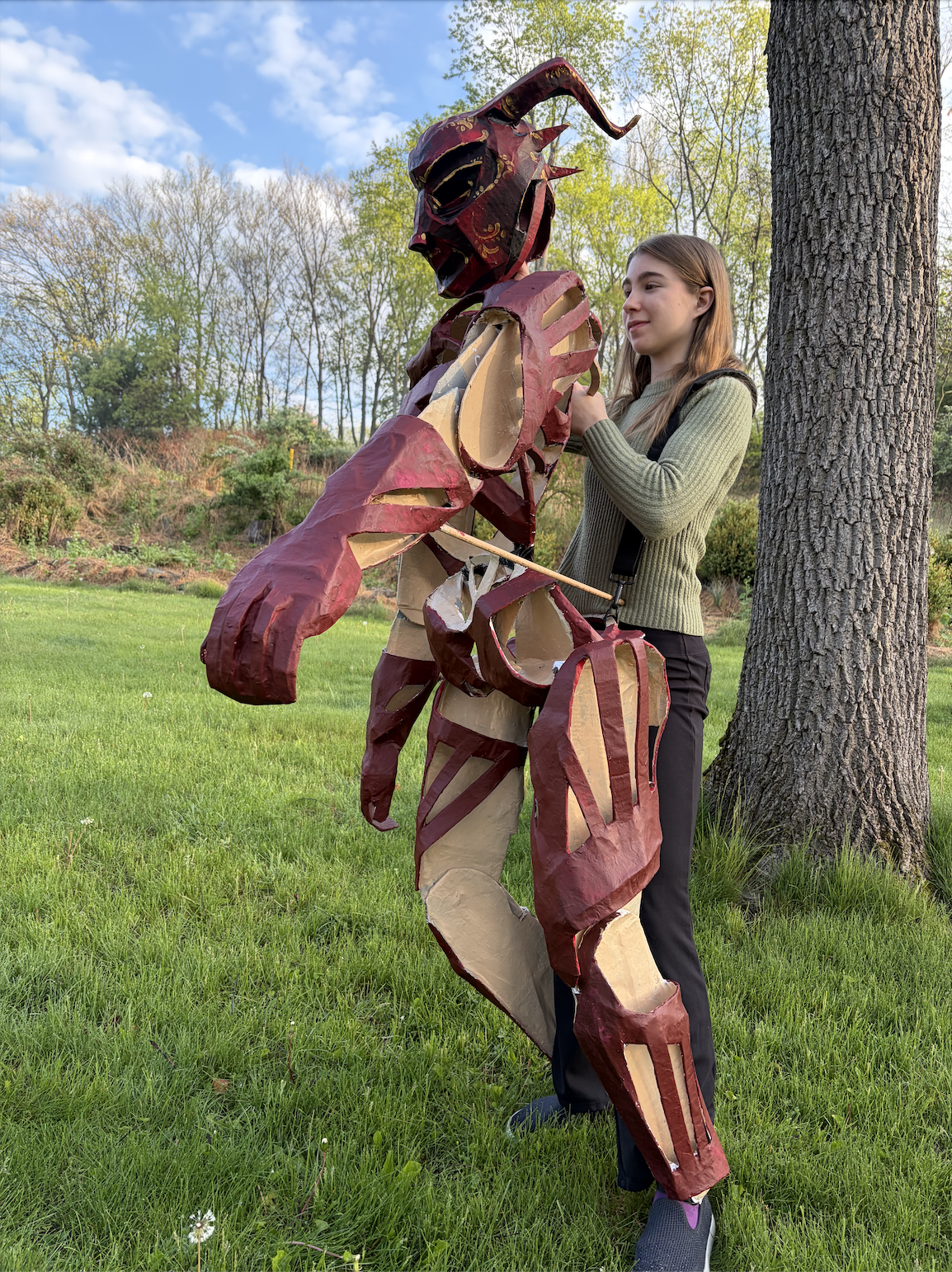
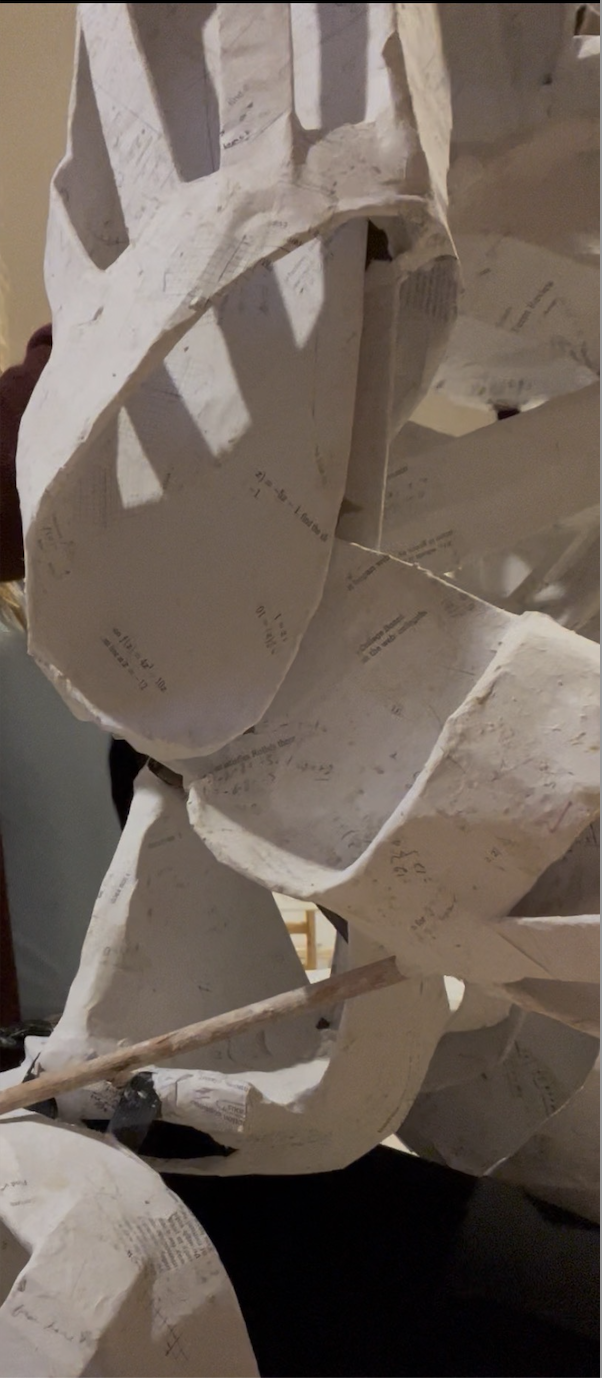
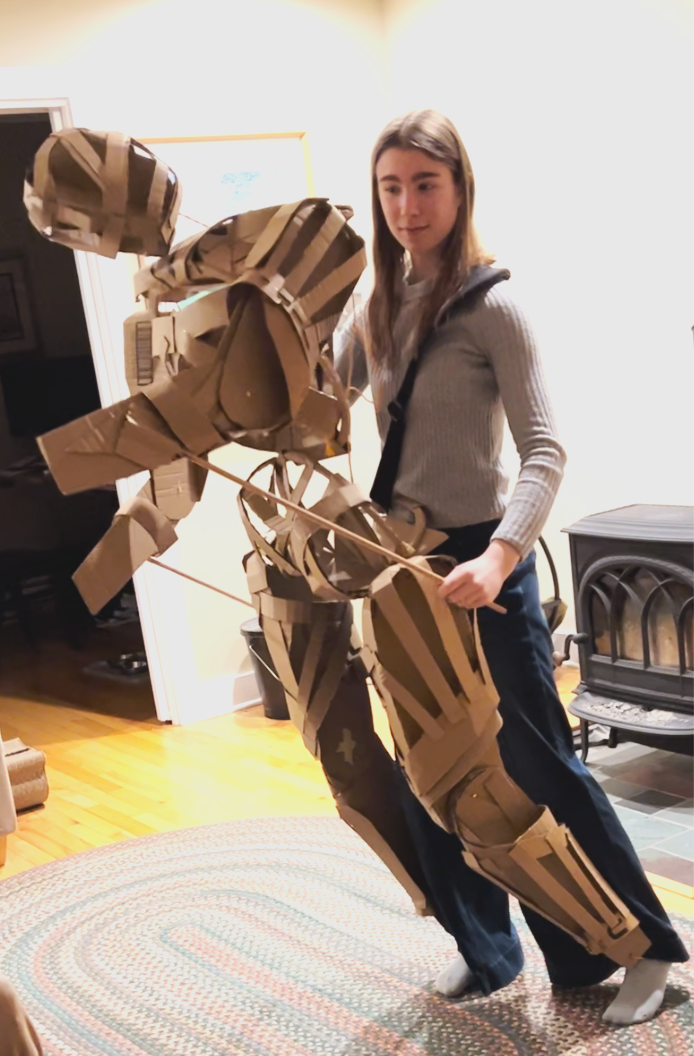
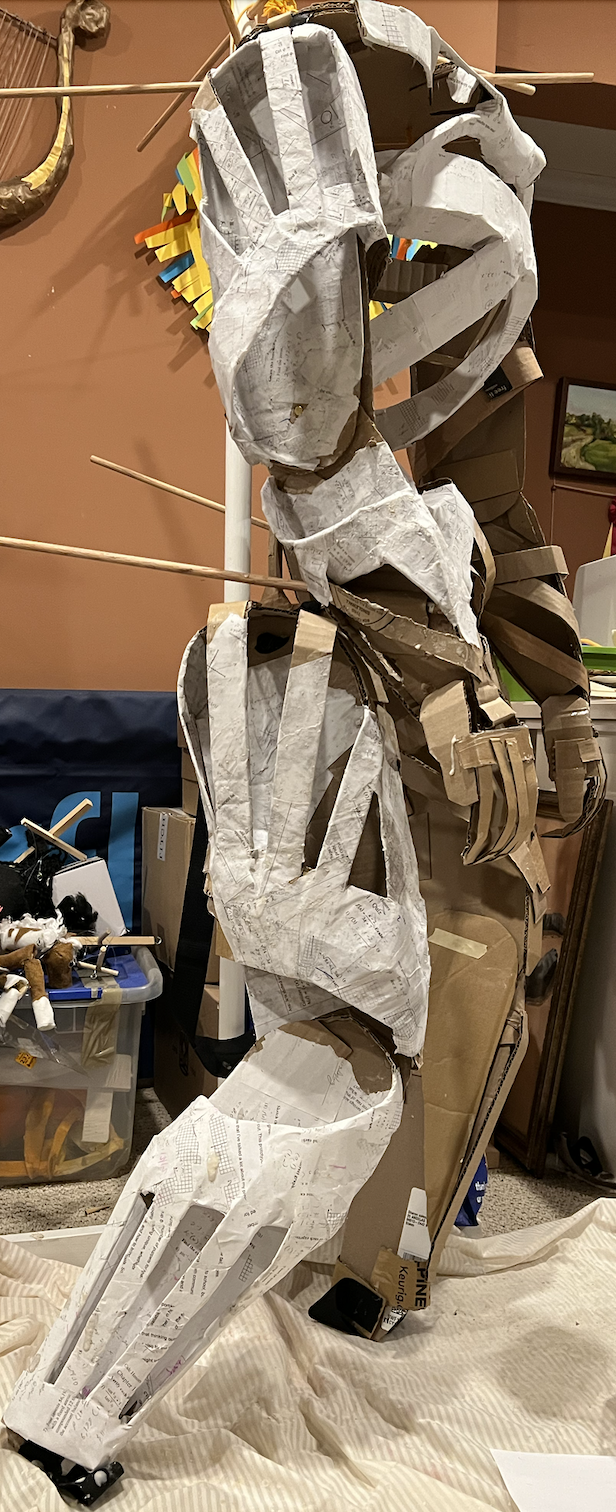
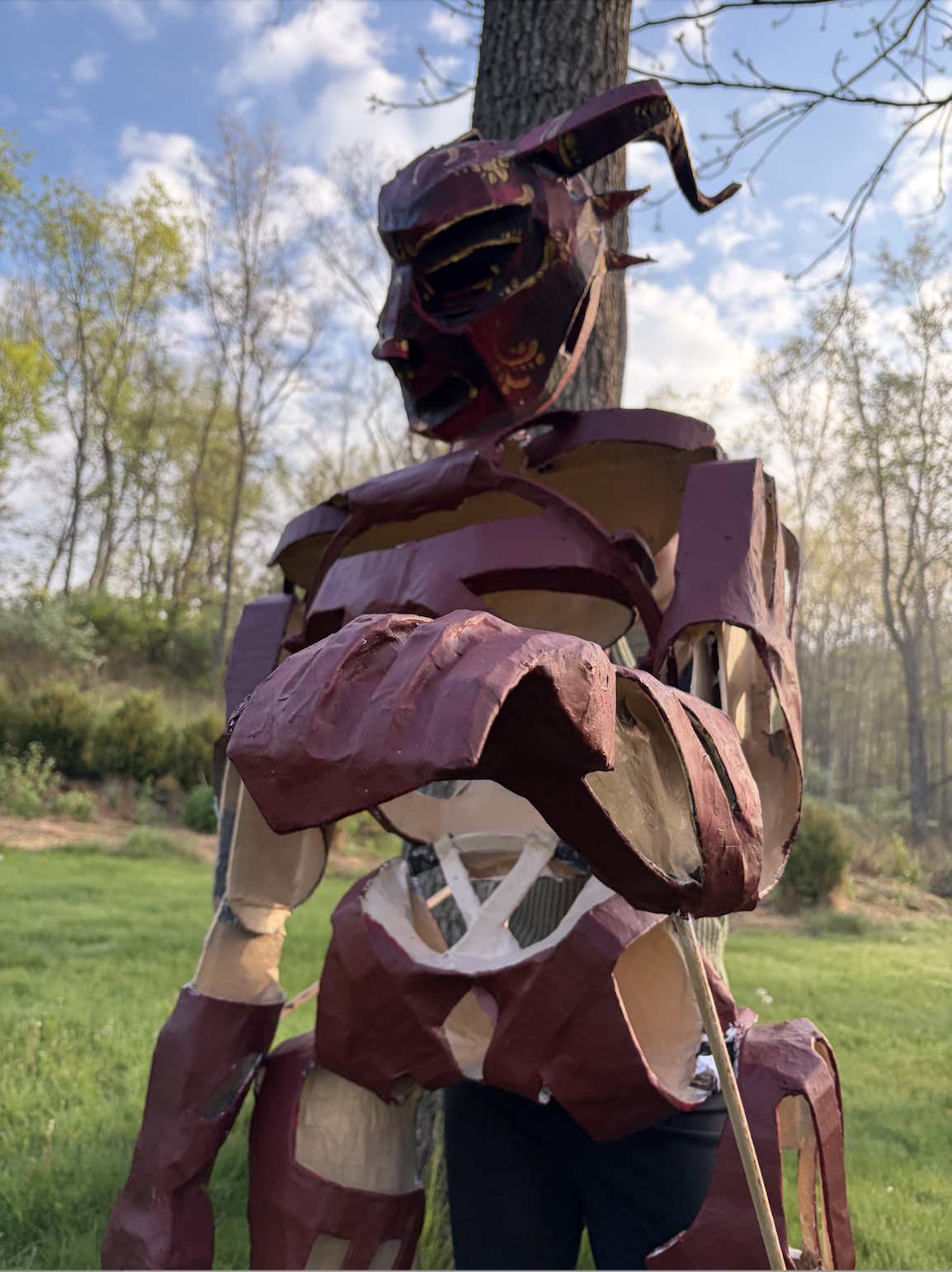
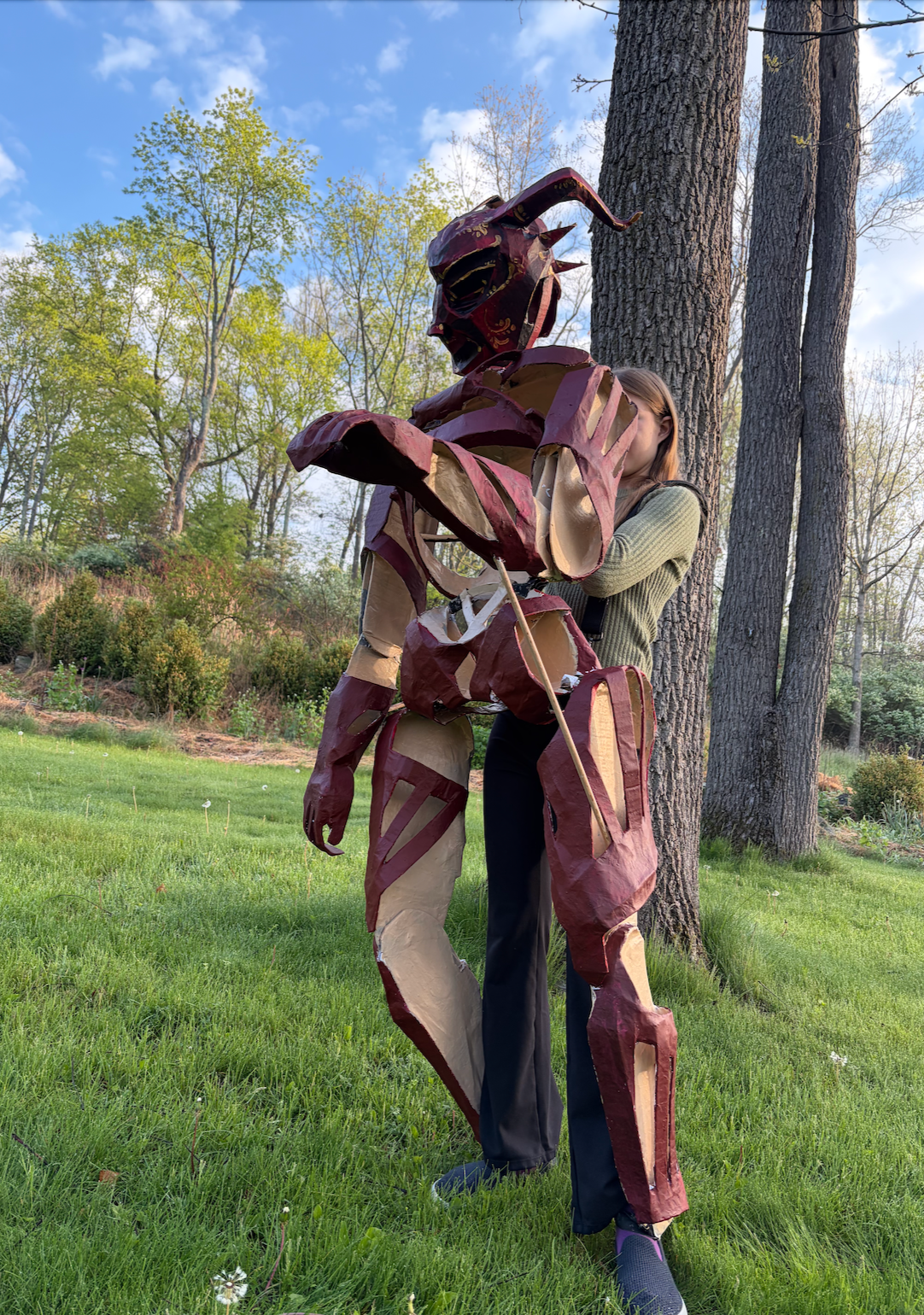
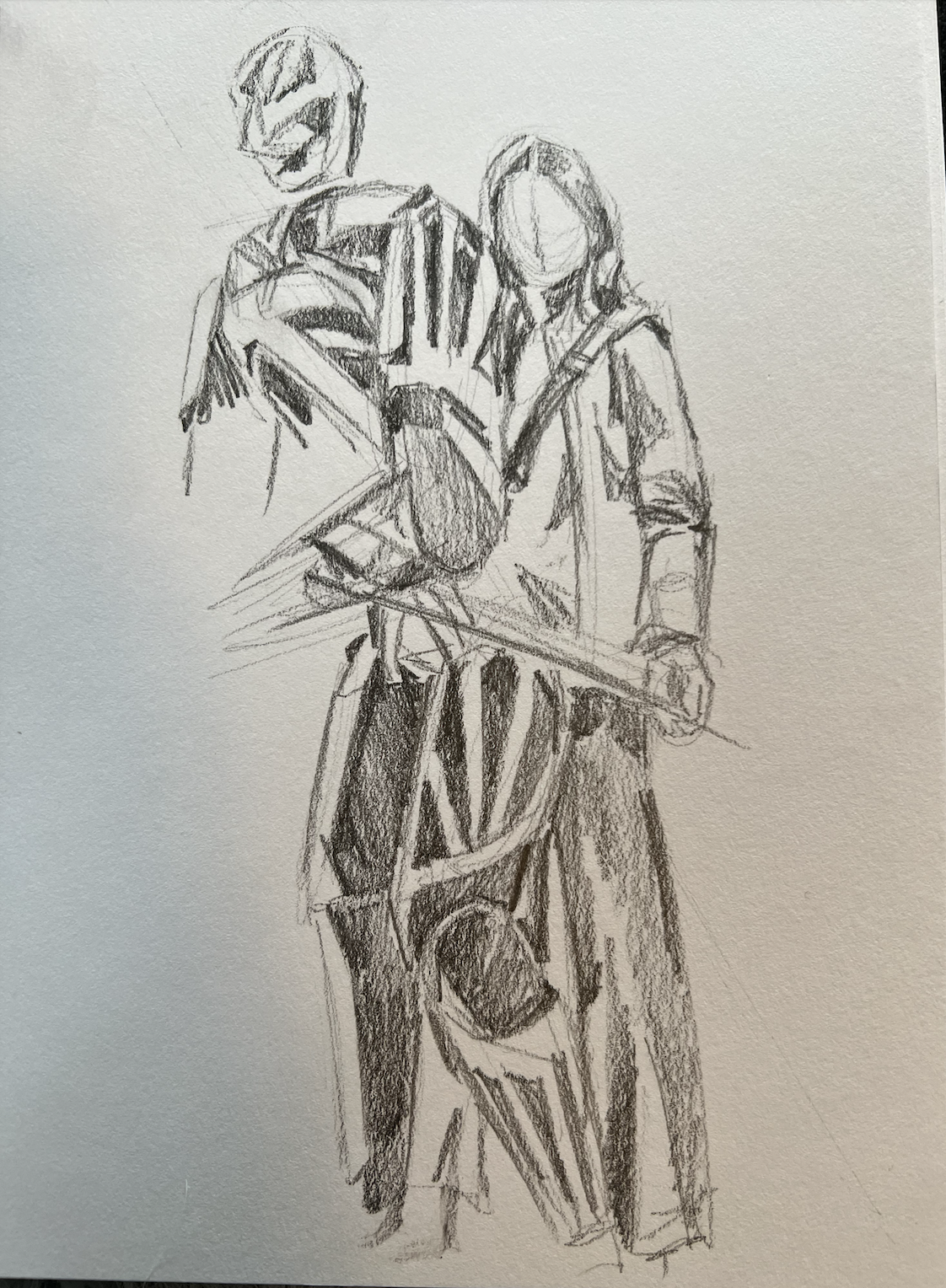
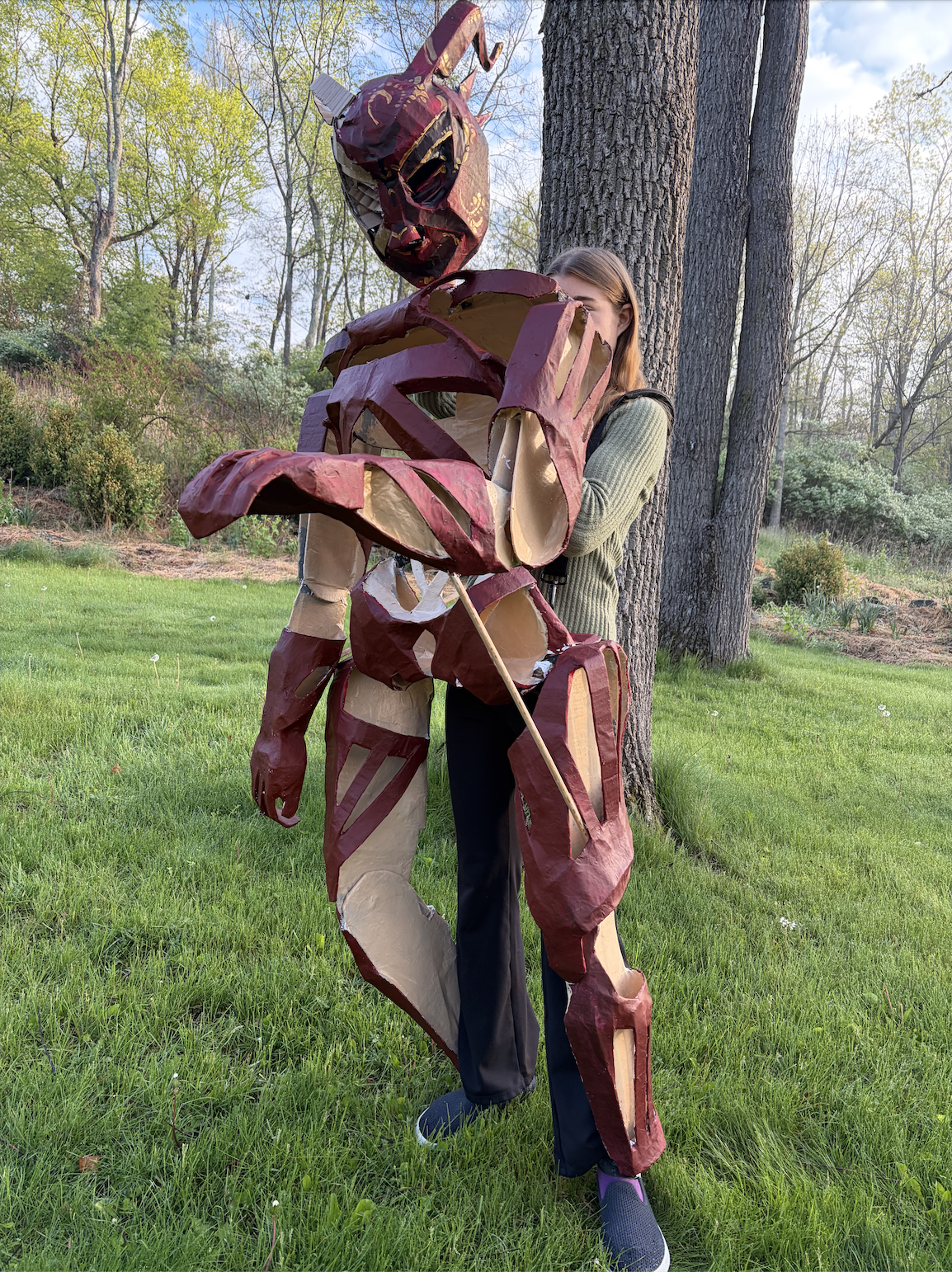
Like many of my puppets, the devil started out as a pile of cardboard boxes. I built the frame almost entirely from cardboard, with a few wooden dowels for reinforcement. The next step was applying a few layers of paper mache, provided by recycled notes and homework assignments, and finally adding color with acrylic paints.
In reality, however, the devil began to take shape long before I even started building it, because of the intensive designing process. Most life-sized human puppets that I have seen require multiple people to control them, and many require five or more. One of my biggest challenges, therefore, was creating a design that could be controlled by as few people as possible with the materials available. My solution was a puppet operated by three dancers; one in the center operating the head with one hand, body with the other, and legs attached via elastic ankle straps while the other two puppeteers each operated one of the devil’s arms.